Friday, February 26, 2016

A Tale of Two Cities


A Tale of Two CitiesA Tale of Two Cities by Charles Dickens
My rating: 4 of 5 stars

I first read this book when I was in high school. I don’t recall if it was for a specific class, but I remember that I simply loved it and always thought of it as my favorite Dickens, even after reading such classics as David CopperfieldDavid Copperfield and Great ExpectationsGreat Expectations. However, since high school was over 40 years ago (gasp!) and our book club likes to read at least one classic a year, I nominated A Tale of Two Cities, as I wanted to refresh my memory on why I loved it so much. And a third of the way into the book, I was seriously questioning my high school judgment!

As most people know, ATOTC is about the French revolution. The two cities are Paris and London. The first part of the book introduces us to the cast of characters, which isn’t as large as many other books by Dickens. We learn about Charles Darnay, the young French aristocrat who has walked away from his estate and title to live in London. He falls in love with Lucie, the daughter of Dr. Manette, who was a political prisoner in France until recently. Sydney Carton is the barrister who becomes involved in their lives, and who also loves Lucie. Those are the main characters in London, though there are a few secondary characters that end up playing significant roles in the action that transpires. In Paris, we meet the Defarges, a married couple who are both leaders in the revolution. Again, there are a few other characters that impact the plot, but it is the Defarges that we mostly follow.

Because the entire first half of the book is establishing characters and their relationships, I was baffled by why I had loved the book so much when I first read it. We see lots of little vignettes showing the characters involved in what appear to be insignificant activities. I was just not engaged by any of the characters, and even the love triangle seemed forced. Thankfully, Dickens is a master at creating an interesting turn of phrase, and quirky characters, so I kept plugging away at the book. And I was rewarded by the last third - in spades!

The action in the last part of the book takes place back in Paris, where Darnay has returned to carry out a mission of mercy. But the revolution is in full swing and he is arrested because he is an aristocrat. Things happen fast and furious from this point on, and we see how events from the first part of the book tie into events in this section. Dickens was absolutely masterful at sprinkling these seemingly unrelated events throughout the book, and then weaving them all together in an intricate tapestry. It was brilliant! He also gave each secondary character a scene of their own, where we get to see them at their best/worst. The themes of love, honor and sacrifice were powerfully played out. This last section of the book is clearly why I loved it so in high school! And why I still think it’s one of Dickens’ best books, despite the seemingly slow start.

Dickens’ portrayal of the revolution and its proponents was quite interesting. For someone whose writings helped change the way the poor were treated in Great Britain, he doesn’t paint the revolutionaries in a very favorable light. He certainly highlights the abuses of the aristocracy, but the proletariat are portrayed as blood-thirsty villains, uninterested in truth, only revenge. His depiction of what can happen in mobs, and how easy it is for noble causes to be hijacked by baser motivations, shows great insight. I was reminded of the events in South Africa, when they threw of Apartheid, and how they didn’t succumb to a spirit of revenge, though God knows they had enough motivation. I was also struck by the similarities of the world (and U.S) today, where great wealth is in the hands of a very few, who live lives so completely removed from the lives of the rest of us that they could be on an entirely different planet. I wonder if at some point there will be a similar revolution. Food for thought.

Wednesday, February 10, 2016

Wednesday, October 14, 2015

All the Light We Cannot See


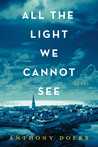
All the Light We Cannot SeeAll the Light We Cannot See by Anthony Doerr
My rating: 5 of 5 stars

No wonder this book won the Pulitzer Prize, and was nominated for so many other awards, and is found on so many “best of” lists. This is an amazing book, on multiple levels. It brings the horrors of WWII down to a personal level, but is never overwhelming or overly dark/depressing. In the end, it speaks of the strength of the human spirit, even in the face of evil.

But don’t let the lofty themes scare you – this is also a wonderful story of two young people, a French blind girl and a German electronics whiz, and how they grew up before and during the war, and how their stories eventually come together. Doerr does a wonderful job of capturing life for each of these characters, enveloping the reader with delicious prose that captures the feel of their very different lives.
Marie-Laure lives with her widowed father in Paris. He is the locksmith and key master for the National History Museum, and Marie-Laure grows up surrounded by scientists and collectors. Werner is an orphan boy, who lives with his sister in an orphanage, and who loves to design and build things – especially radios. He is discovered by the Nazis and sent to a training school (boot camp) for young Nazis. The book weaves together the two stories of the children as they grow and as their world changes around them.

The narrative is told in multiple time periods, as well as the two main story arcs. The book starts with the bombing of the town of Saint Malo, with Marie-Laure alone in her great-uncles house. As we skip between storylines and time periods, we follow the two protagonists’ stories and are led to them finally intersecting. What happens after they meet is probably not what most readers would want or expect, but it rings very true.

The title of the book is from a radio lecture that Werner overheard as a young boy, about the spectrum of light. The small part of the spectrum that is visible to the human eye is infinitesimally small, compared to the rest. So much so, that – mathematically speaking – all of the light spectrum is invisible to humans. How this relates to the book is up to the reader’s interpretation. While the obvious hook is Marie-Laure’s blindness, I think it refers to all of the goodness (the “light” in a dark world) that is happening, even in the midst of WWII. Both Marie-Laure and Werner are often struck by some bit of natural beauty, or the kindness of a stranger, and I think it is this that helps them survive.

Another theme addressed is the age-old question of “What makes a good person do bad things?” This question is often raised when discussion Nazi Germany, and Werner’s story depicts this brilliantly. There are many scenes showing how he is gradually sucked into the Nazi war machine – even when his friend in school stands up and refuses to participate. I really came to understand how easy it can be for good people to be corrupted – or at least to be trapped so much as to go along, even when they know it’s wrong.

I also have to mention the prose – it’s fabulous. Doerr’s descriptions are nearly poetic in their imagery, yet it all flows effortlessly. It’s a page-turner, but with certain pages that will cause the reader to pause and savor the words on the page.

This is a book that will stick with me for some time to come – the mark of a book that is not merely entertaining, but that speaks to the human condition. It is truly worthy of the Pulitzer Prize, and is a book that everyone should read.


Saturday, October 10, 2015

The Bartender's Tale


The Bartender's TaleThe Bartender's Tale by Ivan Doig
My rating: 4 of 5 stars

Ivan Doig knows Montana. He knows its landscapes, it moods. He knows its people, and how they are shaped by the land. And he knows how to weave all of this into a captivating story. And while this book isn’t perhaps his very best, even just a "good" Doig is a near masterpiece.

The title could more accurately be The Bartender’s Son’s Tale, since the story is told through the eyes of Rusty, who is six years old when we first meet him. His father, Tom Harry, is the owner of The Medicine Lodge bar* in the (fictional) town of Gros Ventre in north central Montana. Tom and Rusty’s mother “split the blankets” when Rusty was a baby, and Tom sent Rusty to live with his sister in Arizona. Rusty is bullied by his older cousins, and his future looks bleak, when one day
Tom swoops in and declares that Rusty is to come back to Montana and live with him.

The two of them find a rhythm of life together, and things go along fine until the summer of Rusty’s twelfth year. A new girl, Zoe, moves into town, and she and Rusty discover they are kindred spirits. But even more ominous, a strange (to Rusty) woman arrives with her daughter, Francine, claiming that Tom is the father. Francine begins living with Rusty and Tom, and starts working in the bar, thus disrupting the perfect life Rusty felt he had. All of this takes place in the late 1950's and early 1960's.

Like Chaim Potok’s The Chosen, this is a father-son story, and a coming-of-age story for the son. We see the father through the eyes of his son, which means we don’t know everything about the man – we only know what the son sees. And part of the plot of this book is Rusty’s gradual attempts to wean information from Tom as to what Tom did “before” when he was working at the Fort Peck Dam. (Characters and events from Doig’s earlier work, Bucking the Sun, play a not insignificant role in the plot, but reading that book is not really a necessity before tackling this one.)

Rusty’s admiration of Tom is quite natural, and his curiosity about “grown-up life” also feels genuine. Watching him watch and listen to the people in the bar (via a hidden vent) and then being privy to his attempts to understand everything is part of the charm of the book. But Doig never falls into cheap jokes at the expense of Rusty – he is treated with the seriousness of any of the adult characters, and his questions and unease about his mother and his father’s past permeate the book.

There are, as always with Doig, wonderful characters – Canada Dan, the ne’er-do-well sheepherder; the wife of the local newspaper editor who was a star in early Hollywood; Duane Zane, the local garage owner and his bully of a son. They are all depicted with grit and reality, giving Gros Ventre the feel of any actual small town in Montana.

Doig takes his time unraveling the mysteries in the book: Who is Rusty’s mother? Why does Tom rush off on foolhardy trips to Canada? What really happened at Fort Peck? The narrative meanders along nicely, like a bubbling brook traipsing its way through a valley. It is not rushed, but before long you know a great deal about each person in the book, and you feel what they feel. It reminded me a bit of To Kill a Mockingbird in this regard – both have a young child narrator, who is an outside witness to the goings on in the adult world, and both have many little vignettes of everyday life that gradually reveal the whole picture.

While this is not my favorite Doig book (I think that has to go to English Creek) it’s probably in the top three. Anyone who likes Doig’s work will find this a worthy addition to his oeuvre.


*In the bar, the beer of choice is Great Falls Select, and as a native of Great Falls, I especially enjoyed the book's references to the beer and the town, as well as Rusty and Tom's visit there.